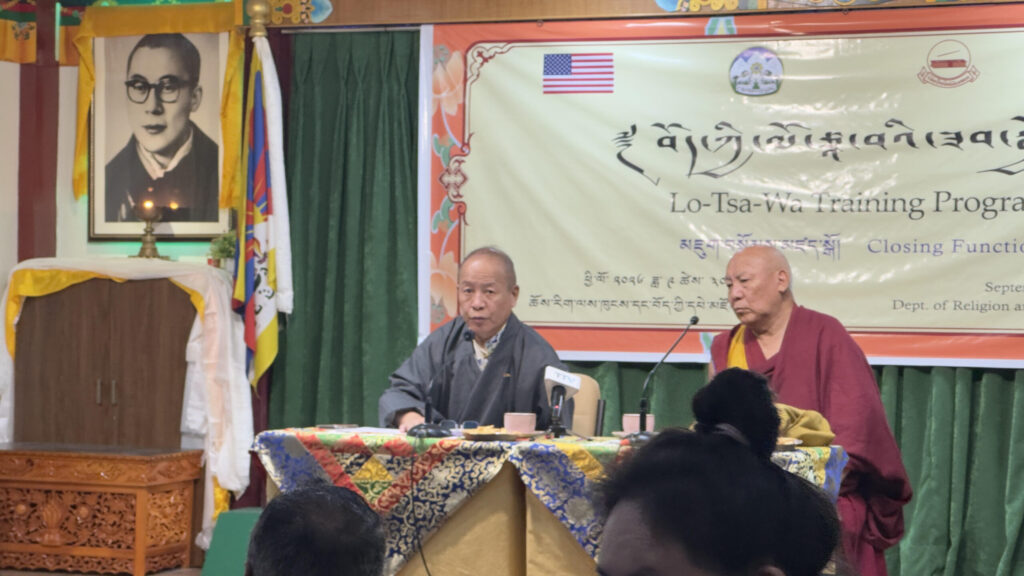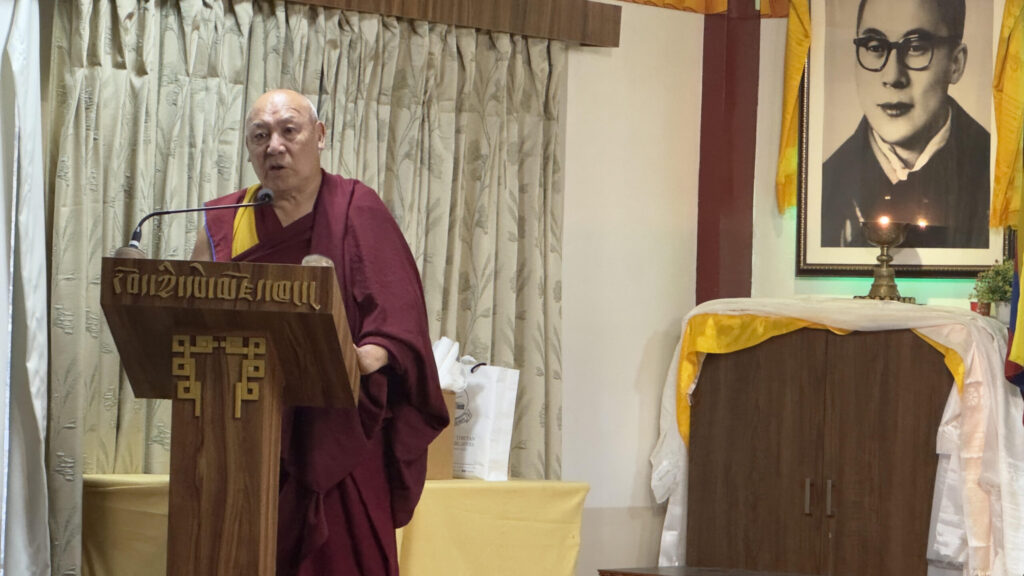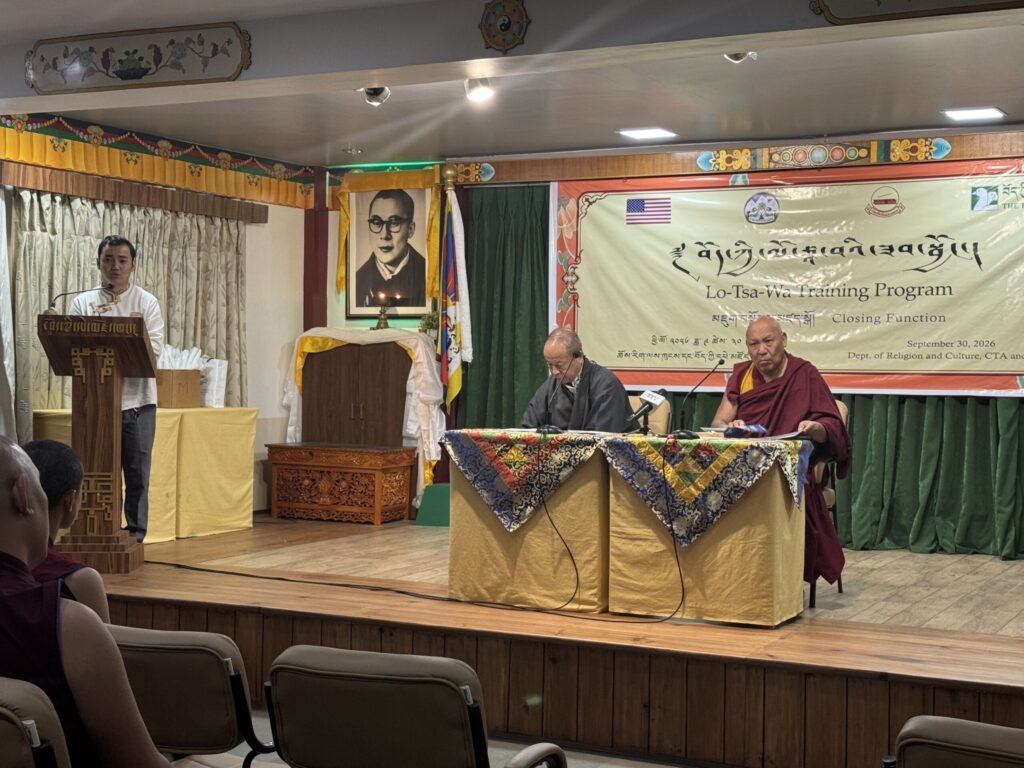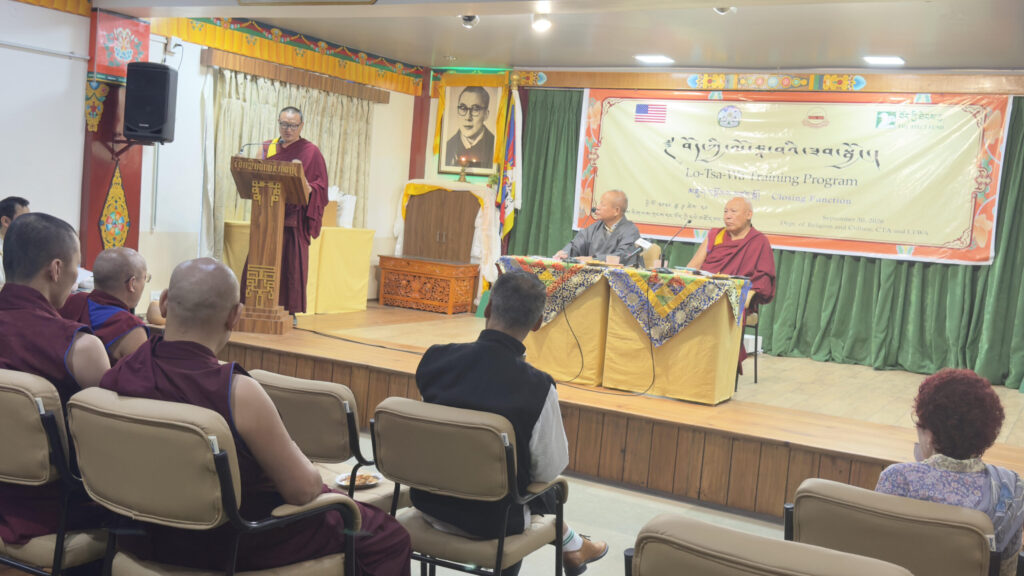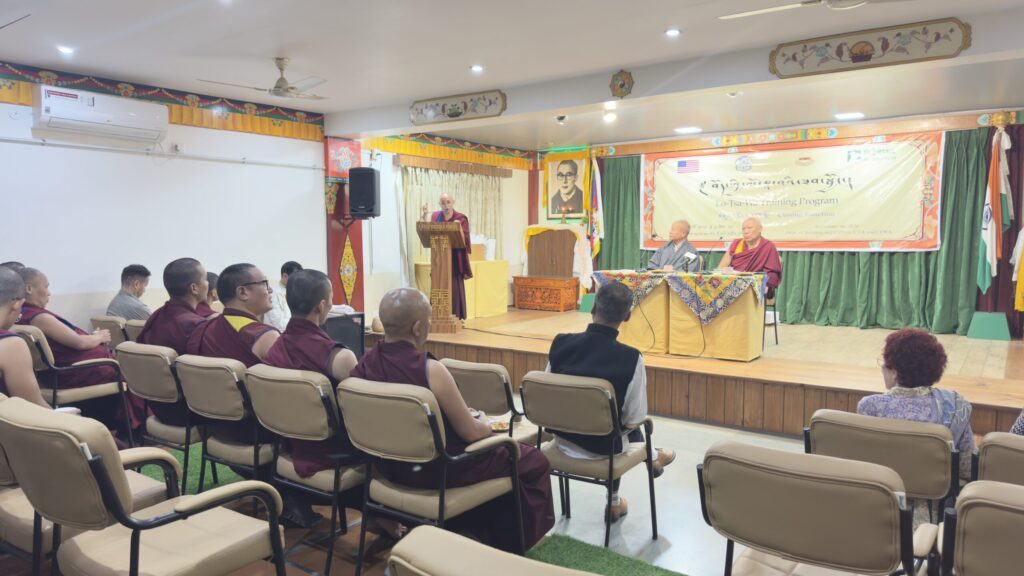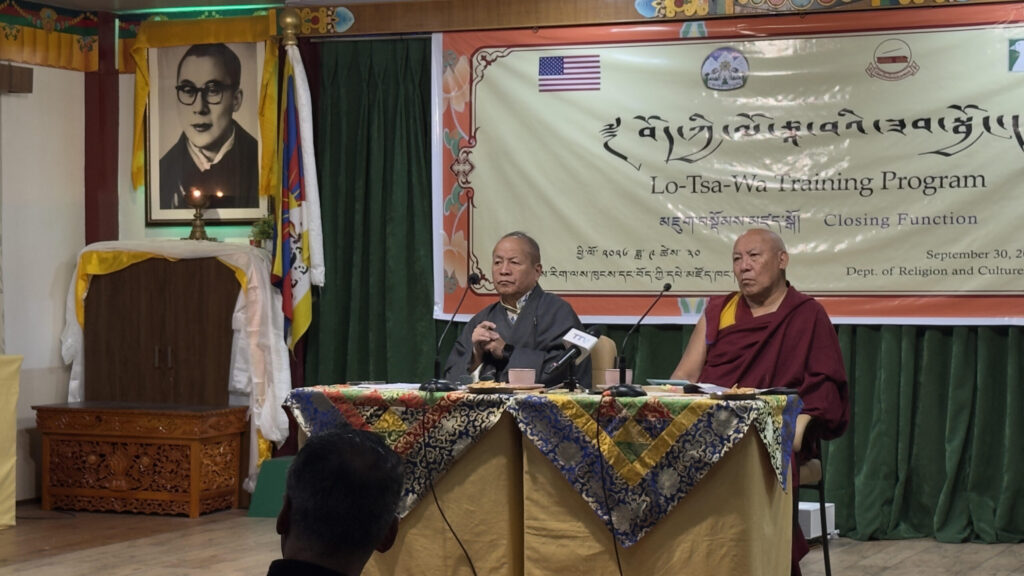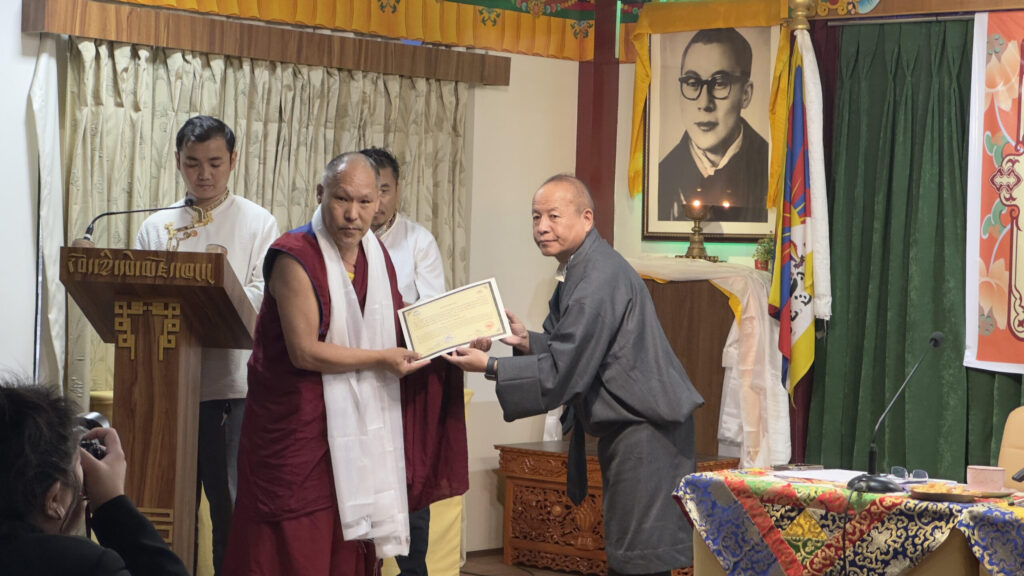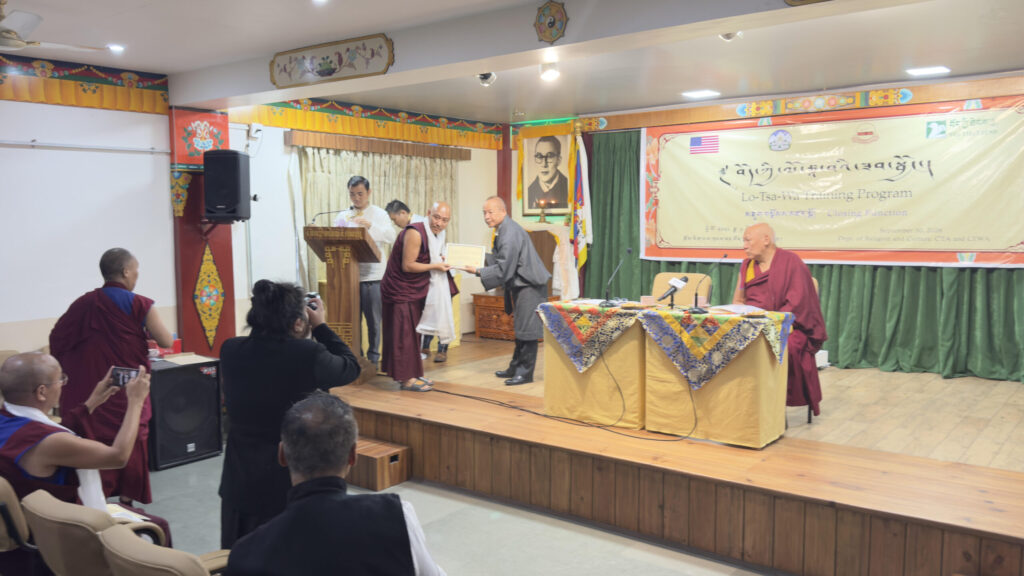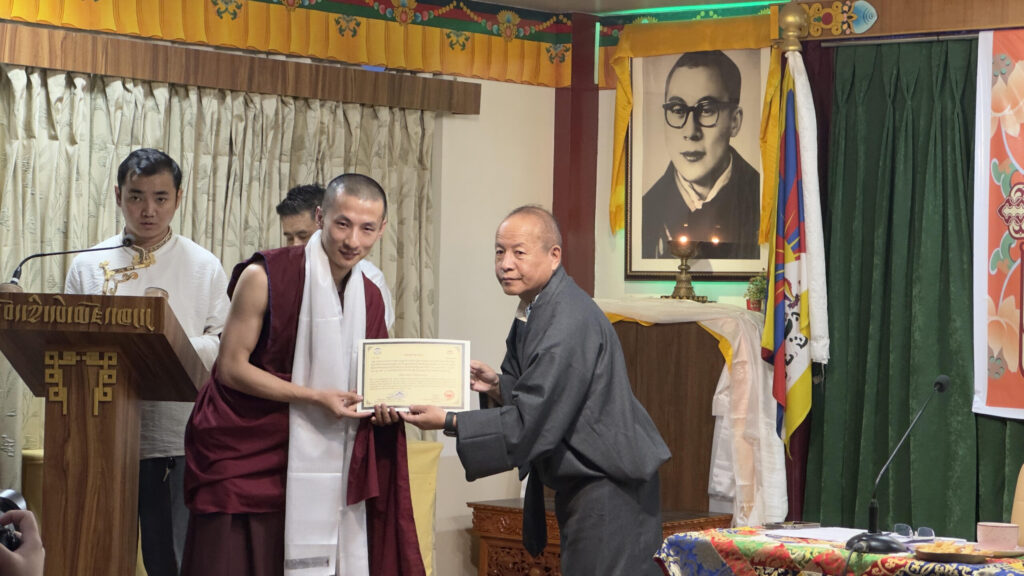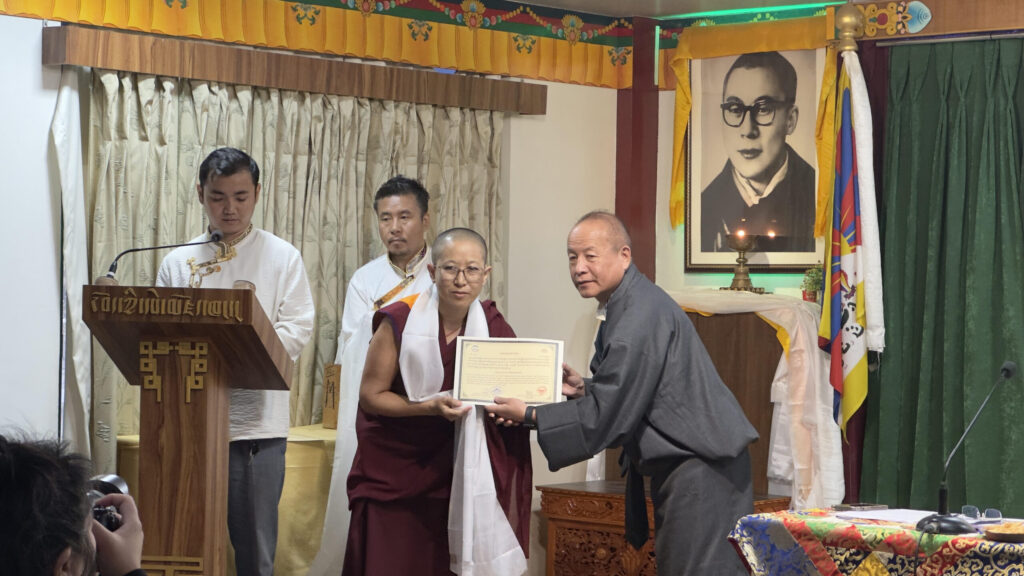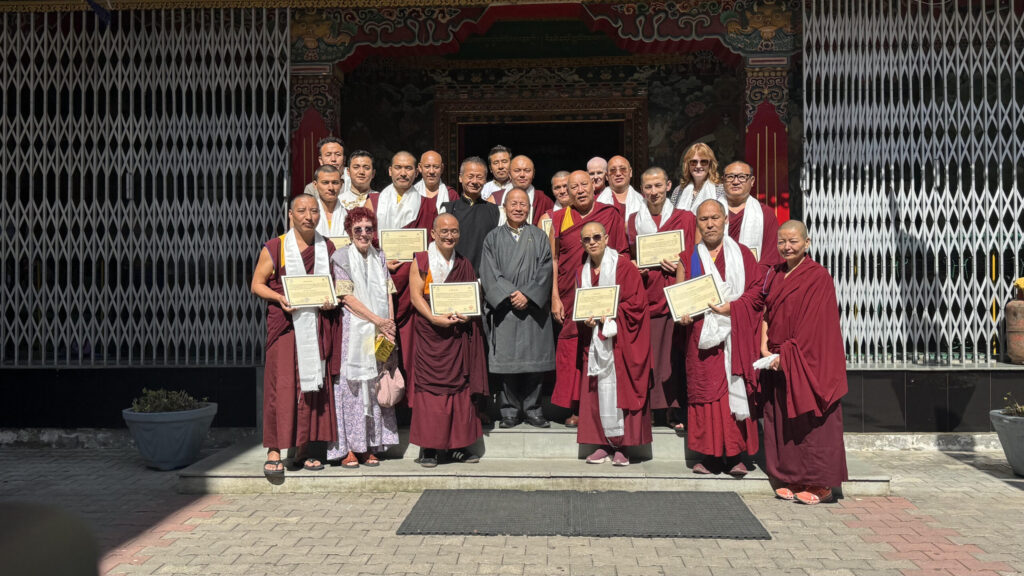
Dharamshala: Kalon of the Department of Religion and Culture, Tsegyal Chukya Dranyi, attended the closing ceremony of the Lotsawa (Translator) Training Programme organised by the Library of Tibetan Works and Archives (LTWA) this morning at the library’s main hall. Geshe Lhakdor, Director of the LTWA, also attended the ceremony, which marked the completion of the 11-month Lotsawa training programme.
A total of 12 Tibetan Buddhist monks and nuns from different monastic institutions completed the year-long training, with the majority of the participants coming from the Himalayan regions. The programme was facilitated by the Department of Religion and Culture of the Central Tibetan Administration in collaboration with the LTWA, with partial funding support from the US State Department through the Tibet Fund.
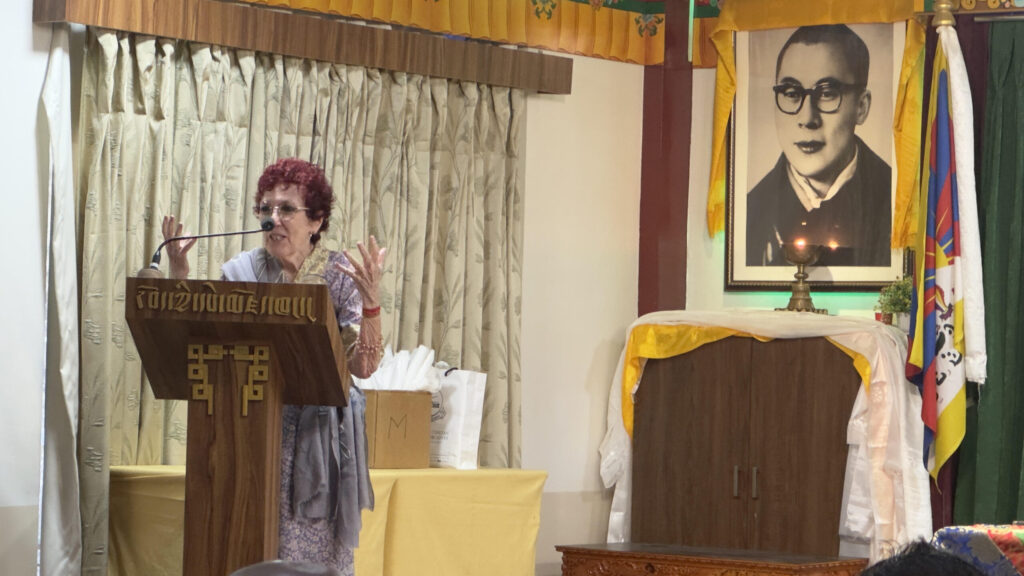
The closing ceremony began with the chief guest lighting a ceremonial butter lamp before the portrait of His Holiness the Dalai Lama and offering a khatag. This was followed by reflections from two participants on their experience of the year-long translation and language training, which began in October last year. An English-language teacher from the programme also shared her experience of teaching and supporting the participants, particularly while working with students who had varying levels of English proficiency.
In his address, LTWA Director Geshe Lhakdor spoke about the importance of translation and the role of translators. He explained that translation essentially involves two key components: transferring the meaning of a source language (SL) and the original text into a target language (TL). He emphasised that this requires translators to develop a strong command of both languages and to continue working and learning throughout their pursuit of the profession.
Geshe Lhakdor expressed his appreciation to the participants for remaining committed to the programme for 11 months and successfully completing the training. He also acknowledged the significant number of participants from the Himalayan region and encouraged them to take equal responsibility for strengthening their Tibetan language skills, particularly in preserving and promoting the Tibetan Buddhist Dharma as taught by His Holiness the Dalai Lama.
Quoting His Holiness the Dalai Lama, Geshe Lhakdor highlighted the importance of developing quality human resources to respond to the growing global interest in Tibetan Buddhism. He noted that Tibetan Buddhism has the potential to contribute to world peace and harmony.
Furthermore, Geshe Lhakdor quoted Gendün Chöphel, the 20th-century Tibetan scholar and thinker, who emphasised the invaluable contribution of Lotsawa in translating Buddhist texts into Tibetan. He said that Tibetans should remain grateful to the translators of Tibetan Buddhist texts, noting that even if they were to repay them with their treasures and wealth, it would not be sufficient to express their gratitude. He likened Tibet to a land surrounded by snow mountains but filled with darkness within, saying that the Lotsawa were responsible for bringing light into that darkness.
He further recalled Gendün Chöphel’s reminder that Tibetans should always remain grateful for the work of Lotsawa and the Dharma Kings of Tibet, whose efforts made possible the translation of a vast body of ancient Indian texts into Tibetan.
Addressing the gathering, Kalon Tsegyal Chukya Dranyi expressed his appreciation for the hard work and dedication of the language teachers who conducted the 11-month training for 12 participants from different monastic institutions, each with varying levels of English-language proficiency.
He said that the training programme was the first of its kind and aligned with the Department of Religion and Culture’s initiatives marking the Year of Compassion, commemorating the 90th birthday of His Holiness the Dalai Lama.
Kalon said, the training programme aimed to strengthen the English-language skills of monks and nuns so that they could contribute to translation work and serve as translators of Buddhist teachings for non-Tibetan speakers. In accordance with the wishes of His Holiness the Dalai Lama, the translation skills acquired through the programme can also support discussions and exchanges with scientists, particularly in the field of dialogue between Buddhism and science.
Kalon Tsegyal Chukya Dranyi extended his best wishes to the participants and encouraged them to carry forward the knowledge and skills gained through the programme, continue pursuing translation work, and make use of technology to further their learning and development.
30 September is also observed as International Translation Day. This year’s theme is “Linguistic Diversity and Language Rights: The Power of Being Understood.”